


-- Rishikesh, India — Nestled along the banks of the Ganges River and cradled by the foothills of the Himalayas, Rishikesh has long been recognized as the spiritual and yogic capital of the world. This land, encircled by mountains and waters, has long been universally recognized as the global capital of spirituality and the global capital of yoga, and no one has ever questioned its core status in these two fields.
For centuries,, sages seeking spiitual practice, travelers in pursuit of truth, and academic scholars have traveled thousands of miles to this holy city to learn ancient practices passed down for millennia, including meditation, breath regulation, and yoga asanas. Each visitor comes with their own aspirations, and what they come to learn is no novel trend—all are time-honored methods passed down through generations: meditation is the practice of calming one’s mind to cultivate self-awareness, breath regulation is the method of balancing one’s vital energy, and yoga asanas are those physical postures that require step-by-step refinement; all are pursuits that demand one to settle their mind and study them slowly and carefully.
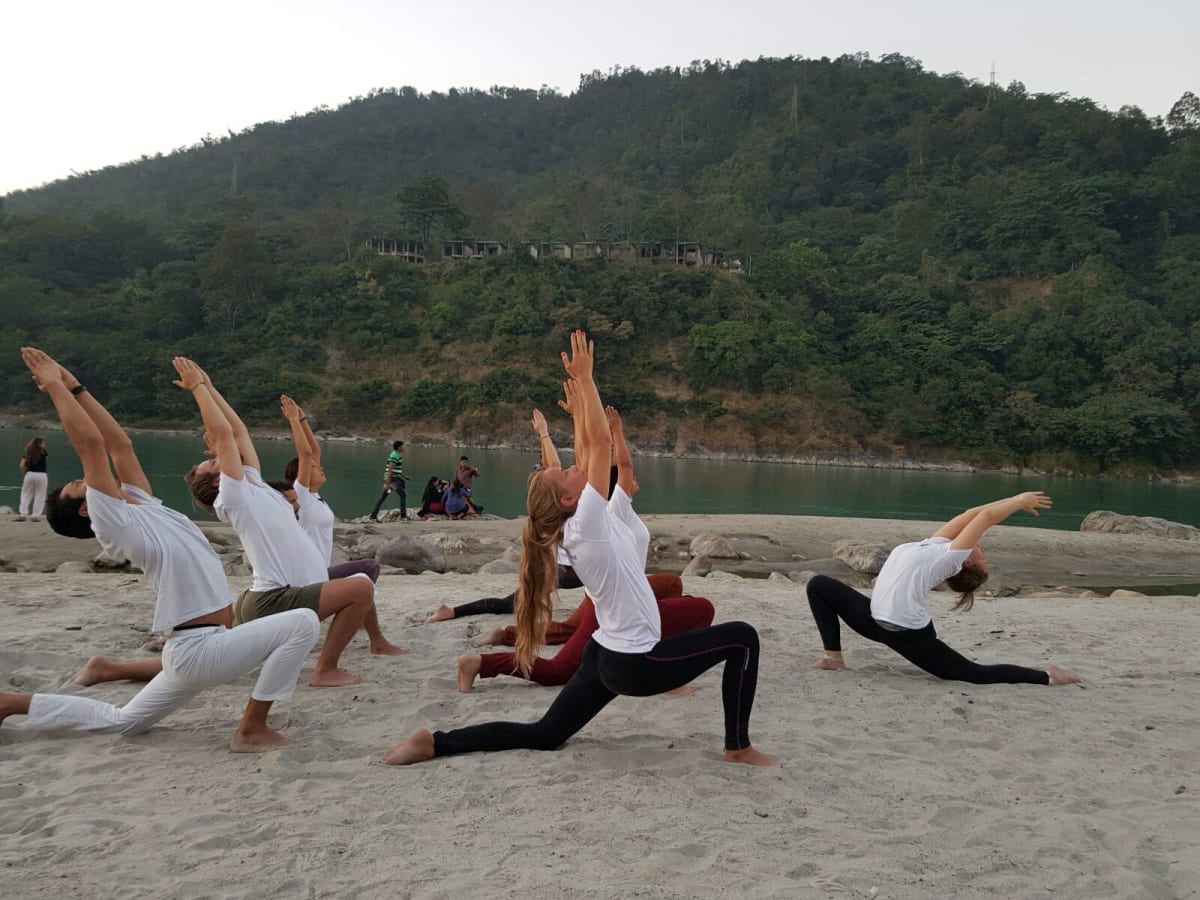
Where practice meets stillness — yoga by the Ganga, in the shadow of the Himalayas.
To this day, this heritage still draws a new generation of yoga practitioners from across the world to this place. These people travel from every corner of the globe, bringing the same sincere intention as those who came hundreds of years ago: first, they wish to deepen their own practice, refusing to stay stuck at the superficial level of imitating movements; second, they wish to experience firsthand the transformative change that comes from participating in Yoga Teacher Training in India, and truly grasp the power within this heritage that can reshape themselves.
A Living Tradition in the Himalayan Foothills
The Himalayas have a significant influence on yogic lifestyle with discipline and philosophy as well as rhythm. To some yogi lineages, these mountains are more than scenery. They are a presence that allows one to focus and be still and reflect internally. Rishikesh is at the approach to these mountains. It is where the glaciers on the top finally releases the Ganges to flow through valleys which were home to rishis and other spiritual monks centuries ago. The location is a reflection of the spiritual history and culture, which ultimately draws yogic education to this area.
Modern yoga enthusiasts who come to this region to practice can hardly help feeling surprised the moment they arrive. The ancient yoga tradition that has been passed down locally for thousands of years can seamlessly connect with well-structured modern teaching, without any sense of incongruity at all, as if they were always meant to grow together this way.
This rhythm that requires practitioners to fully immerse their entire selves is why most students say that the period they spent here changed their lives, far beyond just learning some yoga-related knowledge and mastering a few poses.
Why Rishikesh Remains the Preferred Destination
There are several advantages to taking Yoga Teacher Training in Rishikesh. For one thing, Rishikesh is the yoga capital of the world, and the great levels of experience of teachers, traditional ashrams, Ayurvedic doctors, and other like-minded travelers make it a perfect location to practice. The food is sattvic and vegetarian, life is slower to a pace where you have the time to sit and meditate, and both satsang and kirtan are common to help you on your path.
From the people you meet, to the food, to the yoga, to the views you get in Rishikesh, to the heart of India, the teachings are authentic. Many programs are developed with international certification in mind, so you have the ability to practice yoga in a new country and often teach as well. Rishikesh is known as the heart of India and is a great place to learn the teachings of yoga....
Understanding the Training Pathways
For newcomers navigating their options, it helps to understand the two most common entry points into yogic teaching.
A 200 Hour Yoga Teacher Training in India is typically the foundational certification for those beginning their teaching journey. It generally covers core asana alignment, teaching methodology, foundational anatomy and physiology, introductory philosophy, and the ethical principles that guide a teacher's relationship with students. This level is often the starting point even for experienced practitioners who wish to formalize years of personal practice into a recognized qualification.
For those seeking a more advanced or specialized path, a 300 Hour Yoga Teacher Training in India builds upon the 200-hour foundation. It typically involves deeper study of advanced asana, subtler anatomical and energetic concepts, refined teaching skills, and more nuanced philosophical texts. Many practitioners pursue this level after gaining some teaching experience, using it to sharpen their voice as instructors and expand their scope of practice. Together, these two levels form a widely recognized progression that supports both new teachers and those advancing their careers.
A Holistic Approach to Learning
What distinguishes serious training programs in this region is their commitment to a holistic model of education. Asana is taught not in isolation but as one limb of a broader philosophical system that includes ethical conduct, breath control, concentration, and meditation. Traditional texts such as the Yoga Sutras and Hatha Yoga Pradipika are commonly studied alongside practical anatomy, giving students both the experiential and intellectual grounding needed to teach with confidence and integrity.
This balance of ancient wisdom and modern pedagogical structure reflects a broader shift in how Yoga in India is now approached by serious institutions. Rather than presenting yoga purely as a physical discipline, thoughtful programs frame it as a complete lifestyle encompassing diet, daily routine, self-study, and community living — principles that students are encouraged to carry back into their lives long after training ends.
Who Should Consider This Journey
This kind of immersive training is for more than just future teachers. Many come to this program with the hope to heal personal practice burnout or to find more purpose through their practice. Many others are interested in this program out of curiosity for the philosophical side of the practice that they have limited knowledge of, as they have only practiced in studio classes. The vast majority of people who do this training say it changed their relationship to their practice for the long term.
Potential students are told to look into the curriculum, the teachers and where they are coming from, food and accommodation, and the certifying body, if any. Many programs are scattered around and have similar things. A lot of people have different experiences depending on the program they end up choosing.
Looking Ahead
As global interest in mindfulness, holistic health, and authentic wellness travel continues to grow, the Himalayan foothills around Rishikesh remain a touchstone for anyone seeking to understand yoga at its source. Whether the goal is certification, personal transformation, or simply time spent in a place where the practice was shaped over centuries, the region continues to offer a path that is both deeply traditional and practically structured for the modern student.
Contact Info:
Name: Jesica
Email: Send Email
Organization: Yoga India Foundation
Address: Nirmal B Block, Pashulok
Phone: +919286778739
Website: https://yogaindiafoundation.com/
Release ID: 89200739

 Google
 RSS
RSS